Back to overview

Genesis x Incari – Visionary Design Meets Advanced Technology

With a joint showcase, Genesis Design Studios and Incari demonstrate how seamlessly design and technology can come together, even in the earliest stages of development.

Using Incari Studio as an HMI development platform, innovative design concepts can be tested from the outset and multimodal interactions simulated in realistic usage scenarios. Design elements such as sound, haptics, or lighting effects become tangible from the very beginning of the development cycle.

This allows teams to identify early on what’s technically feasible and where adjustments are needed. Designers and engineers work together in Incari Studio from day one, rather than following a sequential process. The result: a significantly accelerated prototyping workflow.

Bringing the AVIERA EV8 Spyder to Life:
A New Level of Immersive Product Development

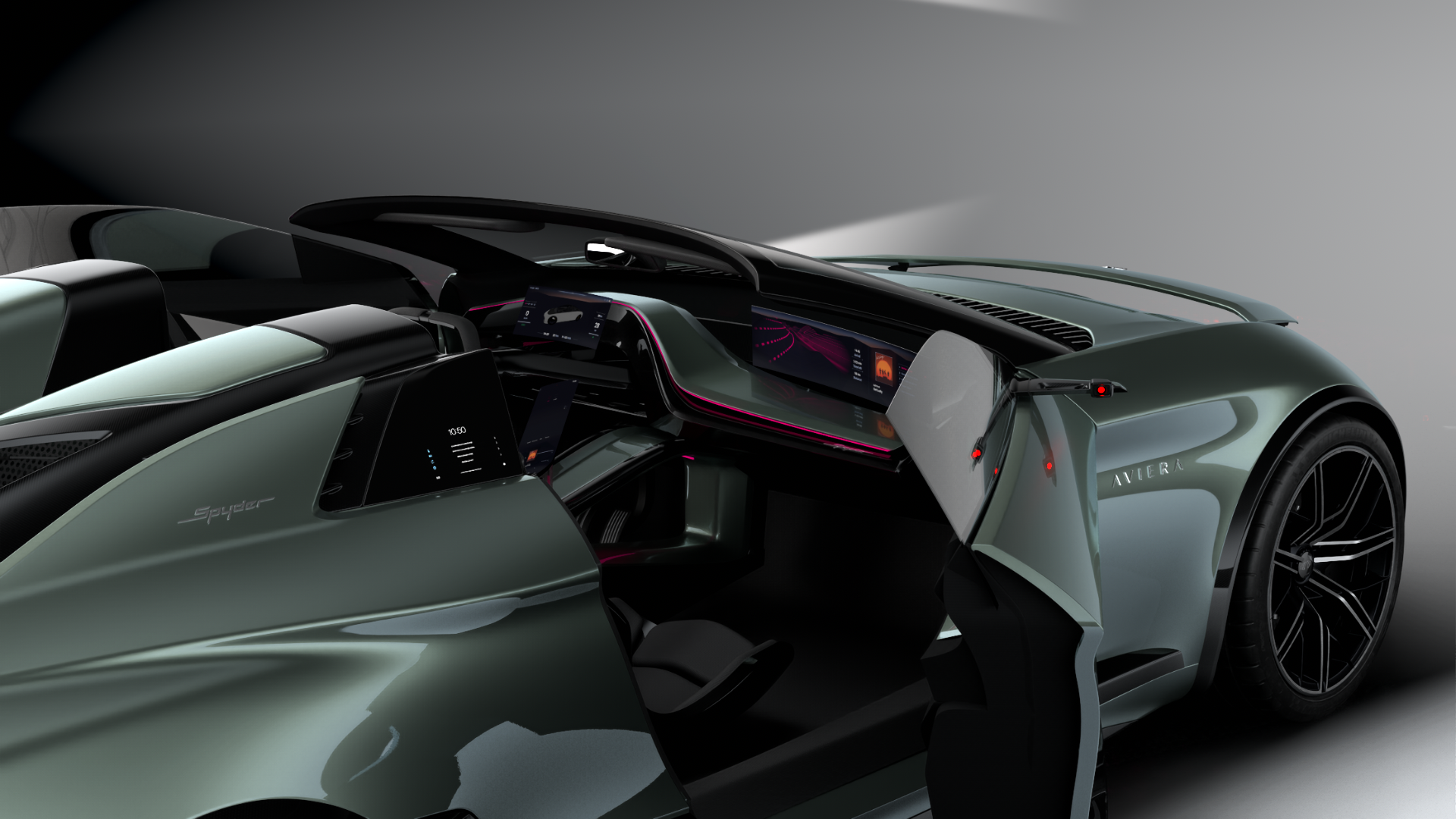
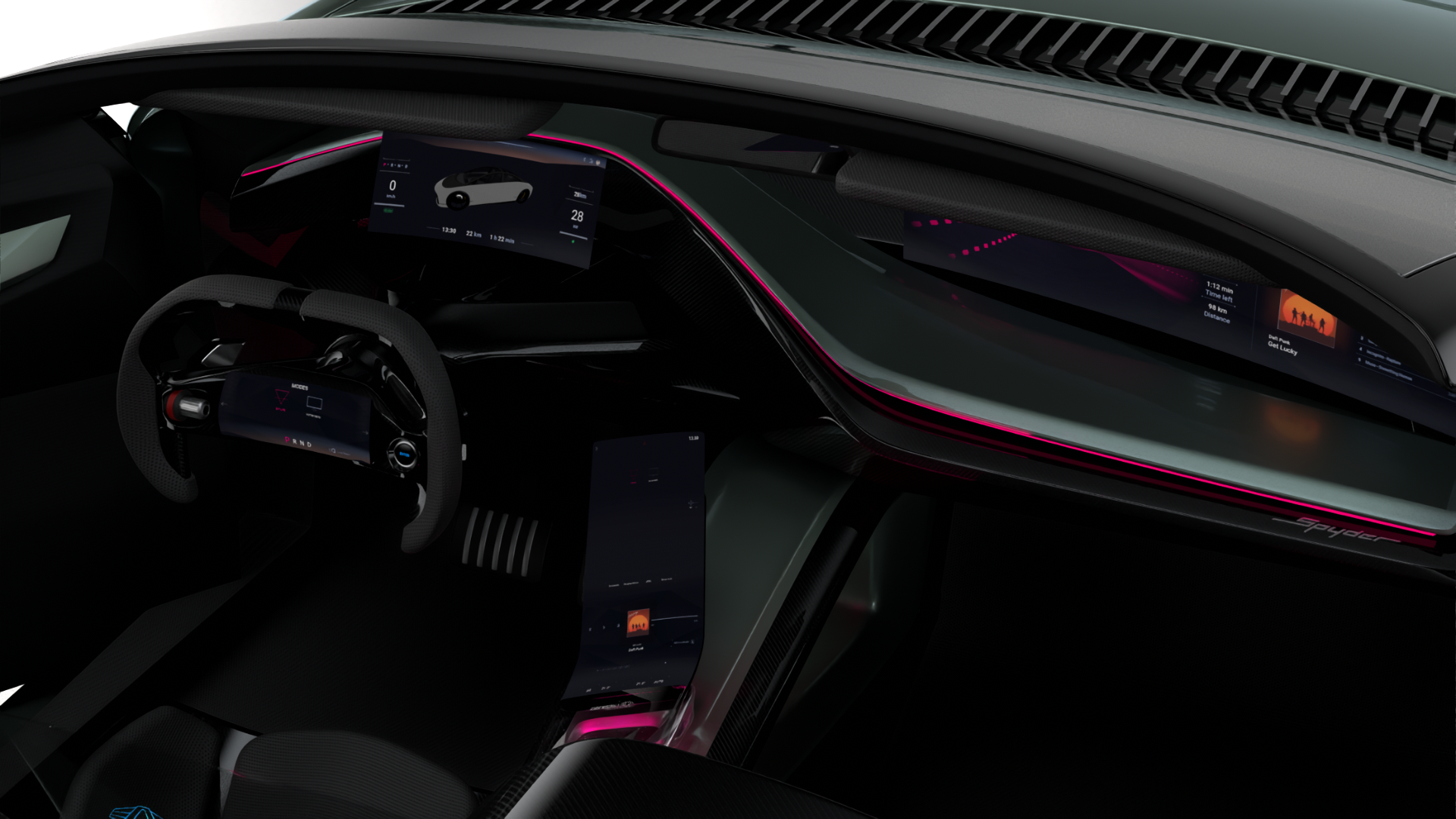
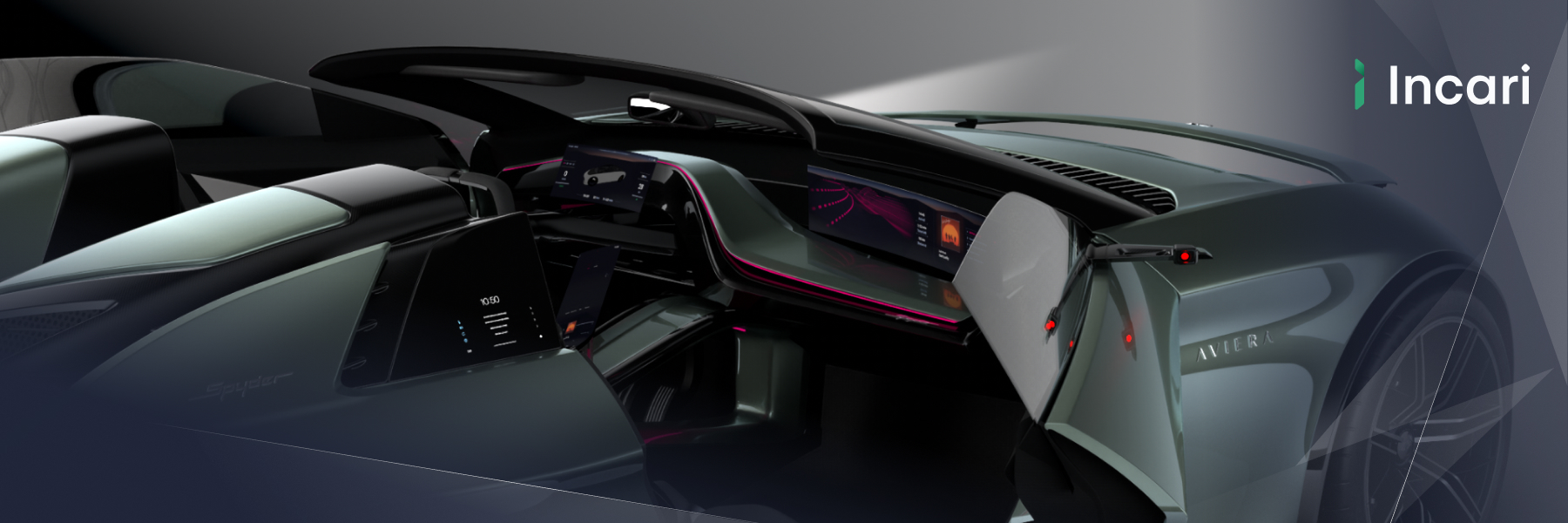
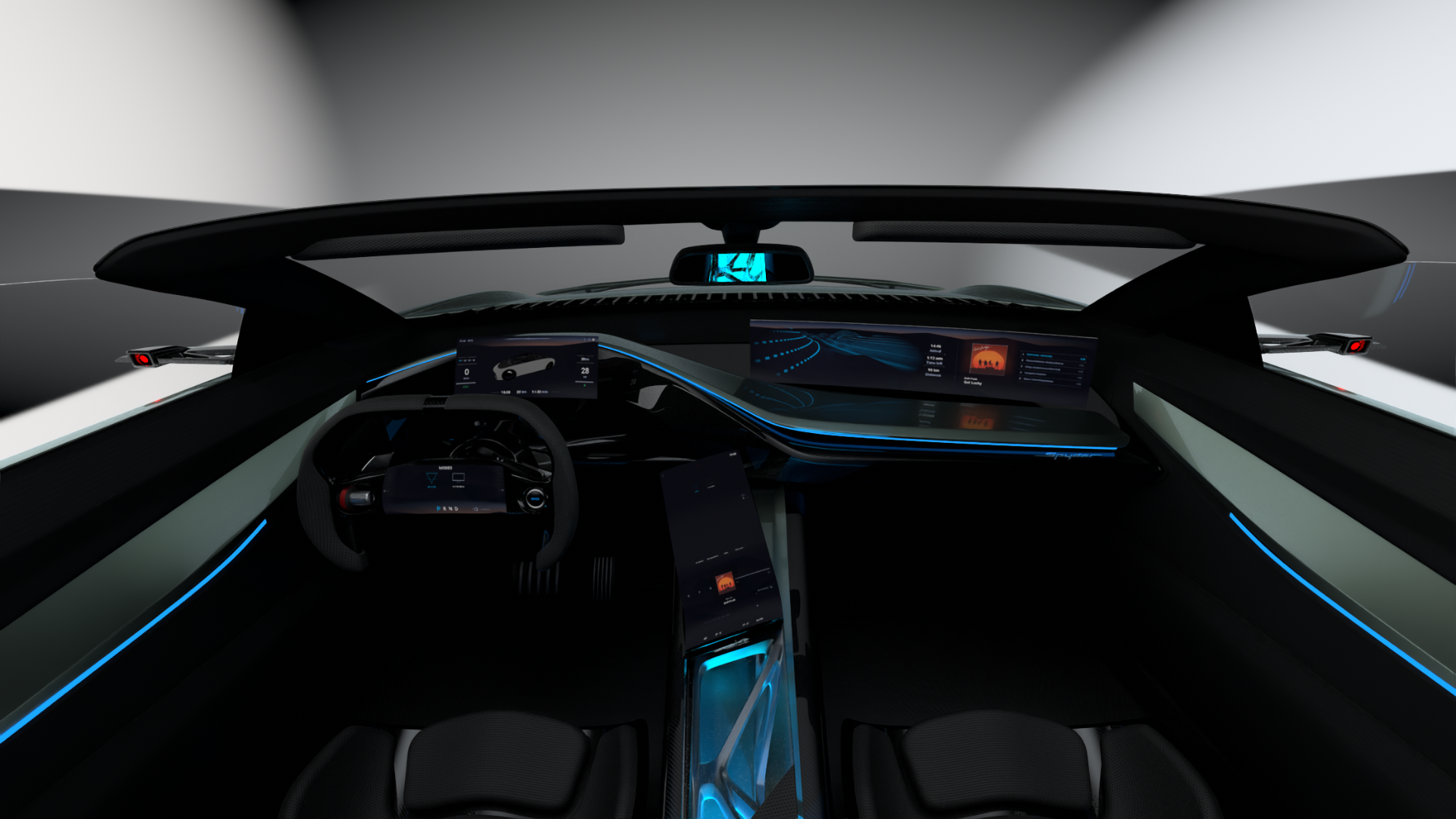
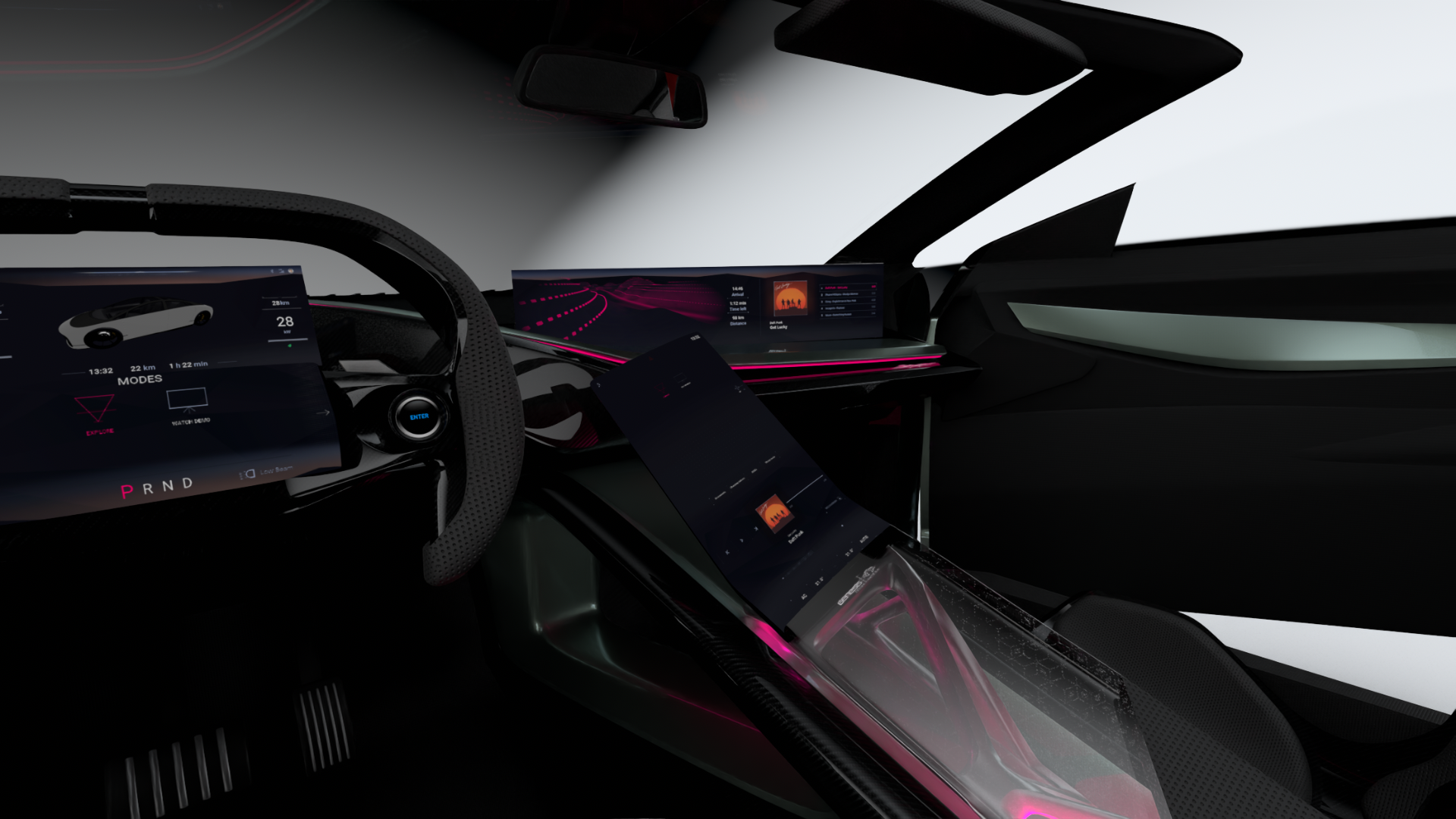
Genesis Design Studios has created an aesthetic, forward-looking showcar with the AVIERA EV8 Spyder, merging visionary automotive design with a digital user experience. Using Incari Studio, the HMI for the cockpit was developed and made fully interactive within a virtual 3D environment.

Thanks to Incari’s native integration with Autodesk VRED, the AVIERA can now be experienced in a realistic 3D environment. Combined with tools like the Apple Vision Pro, users can explore the vehicle in real time and interact with key features like seat adjustments, lighting controls, and media playback.

The prototyping process is further enhanced by the new WebAssembly Player introduced in Incari Studio 2025.1. This allows interactive prototypes to be tested and shared directly in any modern browser, without the need for installation. It enables faster feedback cycles and makes it easier for all stakeholders to get involved, a real advantage for anyone looking to turn ideas into reality quickly and efficiently.
Live Demo of the AVIERA at the DVN Interior Workshop in Turin

The tangible connection between design and technology was showcased at the 10th DVN Interior Workshop in Turin (January 14–15, 2026). Together with Autodesk and Innoactive, the AVIERA EV8 Spyder was presented live in Autodesk VRED, including a real-time experience on the Apple Vision Pro.

As demonstrated in the FORVIA project in 2025, Incari once again shows what modern HMI prototyping in the automotive industry can look like: collaborative, fast, and above all – truly experiential.

Genesis Design is an owner-managed, independent, full-service design studio based in Munich.
The studio seamlessly combines strategic brand and product consulting with creative design excellence and end-to-end product development.

Its core competence lies in creating distinctive brand, design, and product solutions across holistic mobility, lifestyle, and consumer products. With more than 20 years of experience in the automotive and consumer goods industries, Genesis Design translates complex customer needs into meaningful, market-ready, and successful products.

Genesis Design Studios looks forward to strengthening your brand, elevating your products, and creating experiences that truly make your heart beat faster.
Back to overview

Incari Studio 2025.1 is here!

Incari Studio 2025.1 continues our focus on performance, efficient workflows and scalable HMI development. The new release introduces a WebAssembly based player, major performance improvements and refined editor workflows that support complex projects from early prototyping to series production.

New WebAssembly Feature: Running your HMI in the browser

With Incari Studio 2025.1, HMI projects can now be executed directly in the browser using the new WebAssembly based player. Existing Incari projects run without additional code and reuse the same logic and rendering pipeline as on embedded targets.

This makes it easier to share interactive HMI prototypes for reviews and user testing. It also simplifies integration into existing web based toolchains and demo setups. The WebAssembly player is especially useful when collaborating with stakeholders who need fast access without installing dedicated runtimes.

Best practice: WebAssembly in the FORVIA project

The FORVIA CES 2023 project is a strong example of how the new WebAssembly feature can be used in real projects. A fully functional HMI was implemented in a very short time and shared with teams from design and engineering for review and validation.
Running the HMI directly in the browser enabled faster feedback cycles and closer alignment between design and engineering, which contributed significantly to the rapid implementation of the project.

Read the full story here. 

Performance boost for large projects

Incari Studio 2025.1 delivers a significant performance boost when working with complex HMI projects. Loading, saving and updating large scenes is now up to six times faster.

Shorter iteration cycles reduce waiting times during daily work and allow teams to focus on design, logic and interaction instead of tool performance. This improvement is especially noticeable in projects with many screens, assets and logic nodes.

Improved 2D editor workflow

The 2D Scene Editor in Incari Studio 2025.1 offers a more efficient interaction model for layout and screen design. Several workflow improvements help to keep complex interfaces precise and consistent.

  • Axis lock allows constraining object movement to a single axis while editing.
  • Uniform resize makes it possible to resize elements proportionally from edges and corners.
  • Viewport panning lets you move the viewport while interacting with objects.
  • Refined controls improve multi object editing and selection behavior.

Together, these enhancements reduce manual corrections and speed up layout work in complex 2D scenes.

GUI refresh for better clarity

The user interface of Incari Studio has been refined in version 2025.1 to improve clarity and usability. Panels, icons and spacing have been updated to make navigation more consistent across the Studio. The refreshed GUI provides a clearer workspace and supports a smoother user experience when working on Incari Studio projects, especially during longer development sessions.

Further improvements

Incari Studio 2025.1 includes several additional enhancements that further improve daily work.

  • Custom Shader Support in 2D allows building custom visual effects directly in the 2D Scene Editor.
  • Prefab usability has been improved. Prefabs can now be added directly to the creation menu for faster access.
  • The event system has been reworked to support easier event handling using event bubbling technology.
  • Render to texture now supports transparent backgrounds, enabling new compositing and rendering scenarios.

Get started with Incari Studio 2025.1!

Incari Studio stands for fast and efficient development of multimodal HMIs without writing a single line of code. Version 2025.1 builds on this foundation and makes Incari Studio faster, more flexible and easier to integrate into modern development workflows.

Back to overview

CDN Award 2025: A Recap of the FORVIA Project

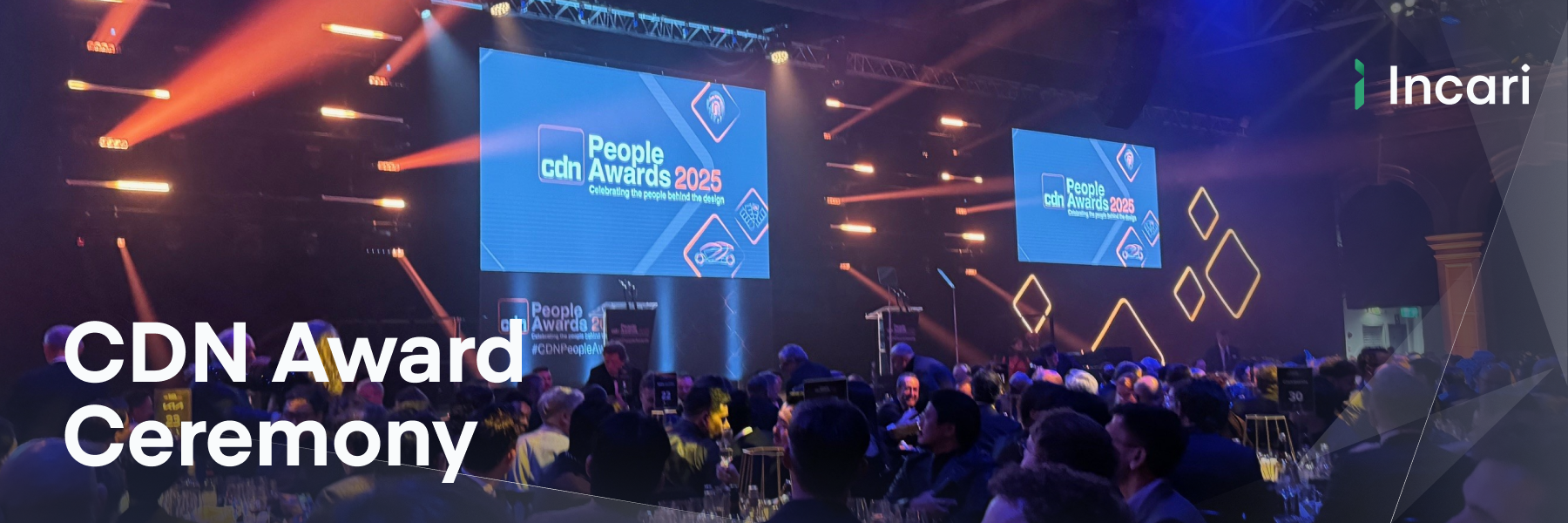
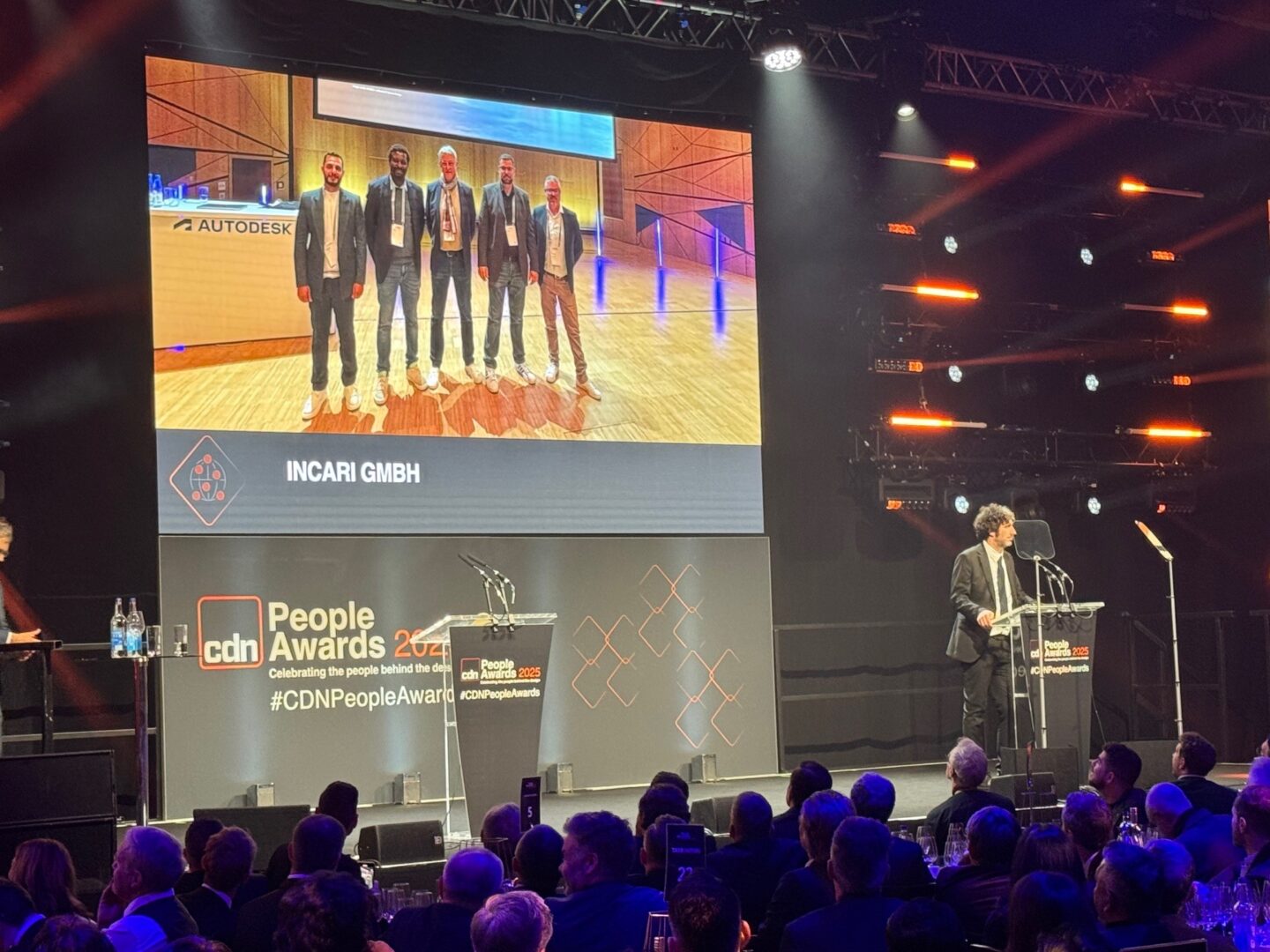
With Incari Studio, HMI prototypes are developed faster and more collaboratively. The FORVIA project proved exactly that and was nominated for the CDN Award 2025, which took place in London on December 4.

Last Thursday, the Car Design News Awards took place in London. We were nominated in the Best Supplier Award category with our project with FORVIA.

The story behind our nomination: In just one week, we built a fully functional UI for FORVIA’s CES 2023 demonstrator. With lighting, haptics, audio, and gesture control, all running in real time. The fast implementation shows how prototyping becomes more efficient and more collaborative much earlier in the process when Incari Studio is integrated into existing workflows as an HMI development tool.


A major advantage in this project was Incari’s native Autodesk VRED integration. Visualization artists and UX/UI designers worked together in one environment. Multimodal interactions such as lighting, audio, haptics, or sensor data can be implemented and tested in real time. This makes Incari Studio an ideal prototyping tool, which this project clearly demonstrated.

For this project and for the way Incari Studio closes a critical gap in today’s HMI development process, we were nominated for the CDN Award 2025. Although we did not win, we congratulate all winners and thank the CDN team for an inspiring evening in London.

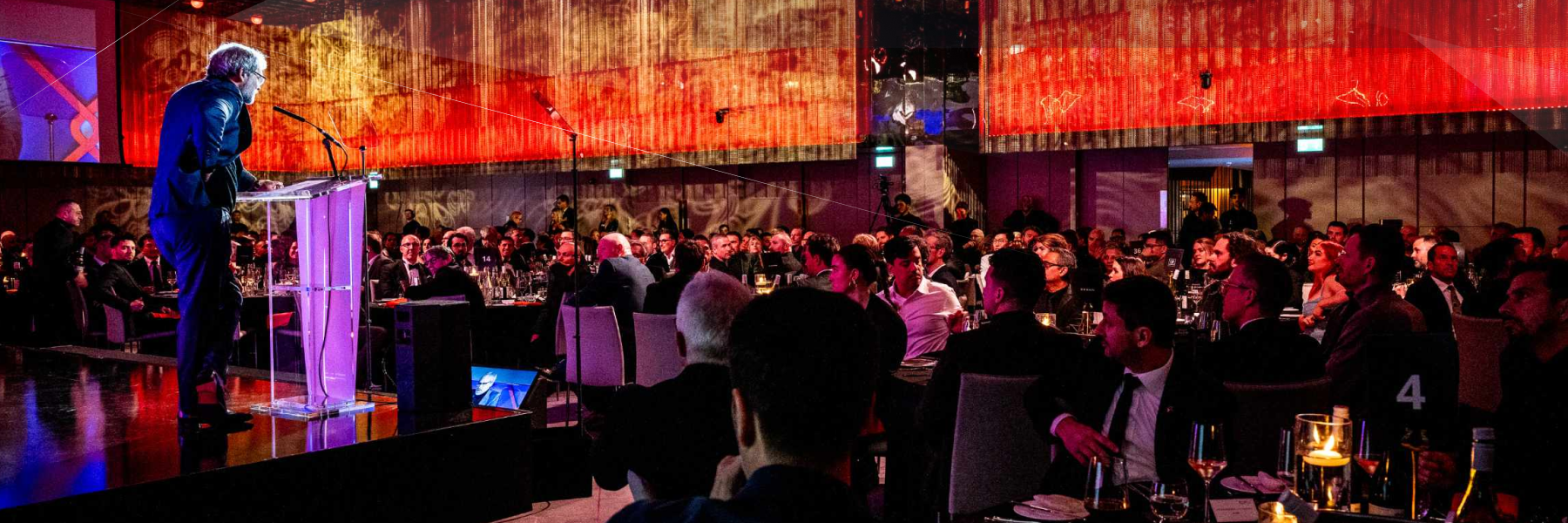
Abdallah Huballah (left, CTO of Incari) and Alexander Grasse (CPO of Incari) at CDN Award in London.
Abdallah Huballah (left, CTO of Incari) and Alexander Grasse (CPO of Incari) at CDN Award ceremony in London.


Back to overview

Bridging Design and Engineering – First Integration of RemotiveCloud and Incari


It took us only 30 minutes to get the first integration of RemotiveCloud and Incari up and running – streaming real speed data into a demo HMI project.

Our quick proof of concept demonstrates how easily real vehicle data from RemotiveCloud can be connected with Incari Studio, bringing early design validation and multimodal HMI prototyping closer together.

“It was really exciting to see how quickly real vehicle data comes to life in a new environment,” says Ufuk Karaca, Solutions Engineer at Incari, who worked together with Ola Nilsson, Cloud Engineer at RemotiveLabs, on setting up the initial integration.

By combining both platforms, designers and engineers can test and adjust prototypes with real vehicle data in real time – long before physical hardware is available.

This accelerates HMI development cycles, reduces costs, and leads to better validated, user-centered in-car experiences.

Back to overview

Incari x RemotiveLabs: Closing the gap between design and engineering

The automotive industry’s biggest hurdle isn’t a lack of imagination - it’s fragmentation. Designers, engineers, and software developers often work in parallel silos, using different tools and workflows. By combining Incari’s design driven philosophy with RemotiveLabs’ engineering-first platform, teams could finally work from a single source of truth, closing the loop between creativity and technical verification.

Connecting design and development

Incari Studio enables HMI design teams to quickly create and test interactive prototypes within a no-code environment. Multimodal interactions, including audio, lighting, haptics, and sensors, are supported right from the start and can be tested in real time during the earliest stages of development.

RemotiveLabs enables early validation of these prototypes early through open- and closed-loop simulation, replay of recorded drives, and synthetic signal generation. From SIL to HIL, teams can test continuously, long before physical hardware exists.

Aligning designers and engineers within the same workflow at earlier stages helps to bridge the gap between concept and technical verification. The result:

  • Faster iterations and early feedback
  • Fewer hardware dependencies
  • Smarter, safer, and more delightful in-car experiences

“Incari allows creative teams to move quickly from idea to interaction. With RemotiveLabs, we see an opportunity to validate these ideas in realistic scenarios – accelerating the journey from sketch to functional, tested cockpit experiences.” — Alexander Grasse, Chief Product Officer, Incari GmbH

“Our tooling is built to empower developers with early testing, virtualization, and CI integration. By complementing Incari’s focus on designers, we can help automotive teams collaborate across disciplines and reduce friction throughout the process.”
— Per Sigurdson, CEO, RemotiveLabs AB

The future of HMI development

The next generation of HMI development relies on uniting creativity and engineering from the outset. Together, Incari and RemotiveLabs open new possibilities for immersive, connected, and future-ready automotive UX.

If you want to explore how Incari and RemotiveLabs can virtualize and accelerate HMI testing and development workflows, here are a few ways to get started:

  • Cloud recordings – Try RemotiveCloud free tier and experience playback, signal replay, and collaborative annotations with available sample recordings.
  • RemotiveTopology – Learn how to virtualize entire platforms and enable seamless SIL-to-HIL transitions in our documentation (30-days free trial).
  • Incari Studio –Try Incari Studio for free and explore how to build HMI solutions with a no-code approach.
Back to overview

Join the team! – Senior AI Developer (m/f/d)

As a leading innovator, we are seeking a talented, passionate, and proactive Senior AI Developer to join our team.   You will be responsible for designing, developing, and implementing AI models and algorithms.

Incari is an international technology and software company revolutionizing the human-machine interface (HMI) landscape. Through our state-of-the-art technologies, we enable various industries, such as mobility, to turn HMI systems from concept into reality. Our platform simplifies the process of HMI development, enabling designers and engineers to collaborate and build HMIs quickly, efficiently, and cost-effectively. Our commitment to a 3D-first approach and low-code makes tech development more accessible than ever before.

Overview

As a leading innovator, we are seeking a talented, passionate, and proactive Senior AI Developer to join our team.  You will be responsible for designing, developing, and implementing AI models and algorithms. As part of your work, you will work closely with cross-functional teams to integrate AI solutions into our product and service offerings, ensuring they meet high standards of performance, reliability, and scalability.  You will be further required to create machine learning models and analyze data to solve complex problems.

What you will need to do

  • Lead the development of AI-driven solutions from concept to production.
  • Design, develop, and implement advanced AI and machine learning models.
  • Colaborate with cross functional teams to integrate AI models into Incari.
  • Optimize and tune AI models for performance, scalability, and reliability.
  • Stay current with the latest AI research and trends, incorporating new techniques and technologies into our projects.
  • Mentor and provide technical guidance to juniors
  • Participate in code reviews, providing constructive feedback, and ensuring best practices.
  • Develop and maintain documentation for AI models, algorithms, and processes.
  • Troubleshoot and resolve issues related to AI model performance and implementation.


Requirements

  • Bachelor or Masters degree in computer science or similar
  • 7+ years work experience and proficiency in AI and machine learning development.
  • Strong programming skills in Python
  • Experience with machine learning frameworks such as TensorFlow, PyTorch, or similar
  • Proven track record of developing and deploying AI models in a production environment
  • Deep understanding of machine learning algorithms, neural networks, natural language processing, computer vision, generative models, or other advanced AI techniques.
  • Familiarity with big data technologies such as Hadoop, Spark, and data processing tools.
  • Excellent problem-solving skills and the ability to work independently and collaboratively.
  • Strong communication skills with the ability to explain complex AI concepts to non-technical stakeholders, clients and teams
  • Experience with cloud platforms such as AWS, or Azure
  • Knowledge of AI ethics and best practices for developing fair and unbiased AI models.
  • Familiarity with DevOps practices and tools for continuous integration and deployment.
  • Contributions to AI research, publications, or open-source projects.
  • Fluent in English
  • Living in Berlin


Why us?

  • 30 days annual leave
  • Agile start-up mentality
  • Being part of a diverse and multicultural team
  • Flat hierarchies, team spirit, and curious mindset
  • Bike benefit
  • Hybrid work environment
  • A fun and inclusive work culture, where creativity and innovation are celebrated

Please send us your detailed application, résumé, and salary expectations to


Back to overview

One orchestrated user experience: The Future of HMI is Connected

Human-machine interaction (HMI) is evolving faster and more fundamentally than ever before. Users no longer think in terms of devices. They expect a seamlessly connected user experience. Touch, voice, gestures, and data streams merge into a multimodal interaction that spans cars, homes, workplaces, and even wearables. Devices communicate with each other and take on increasingly complex tasks.

Why today’s HMI development processes are no longer sufficient

For HMI developers, this shift is a major challenge. Traditional development processes are too rigid, too slow, and too isolated to enable this demanding digital future. Silos between disciplines – especially between UX design and interior design – slow innovation down.

At the same time, the requirements and range of hardware that must be supported in vehicles and other products are increasing. Different resolutions, formats, input methods, and system environments make development even more complex and resource-intensive. Many companies are already struggling to keep pace with the growing complexity of cross-device user experiences.

Incari Studio as a bridge between UX and Interior Design

The solution lies in involving designers and engineers in a shared development process right from the start. This means breaking down silos and bringing all stakeholders to the same table, even if each continues to work in their familiar environment. With Incari, HMIs can be designed, developed, tested, and adapted collaboratively.

One orchestrated user experience

This collaborative approach with Incari Studio enables teams to validate ideas faster, iterate more efficiently, and move from prototype to series production without detours. The future of HMI is no longer UX on one side and interior design on the other. It is one single orchestrated user experience – with Incari Studio as the stage where all instruments play together in harmony.

Back to overview

We speak at RESET 2025 in London!

Our CPO Alexander Grasse will be speaking at this exclusive event for leaders across industries. Our contribution will be part of the Automotive Sessions.

Under the title “Beyond the Screen: Rethinking HMI for the Next-Gen Driving Experience” we will give insights into the cockpit of tomorrow and how HMI development must adapt to new challenges.

The next generation of drivers expects smart HMIs that go beyond screens, enabling seamless interaction across all senses. That means less complexity, higher user experience, intuitive operation — and above all, faster, simplified development cycles.

🗓 Tuesday, Sept 9, 2025 – 5:00–5:10 PM
🎤 Alexander Grasse, CPO Incari GmbH

✖️ Can’t make it to the RESET? – Watch Alexander’s interview on the Car Design News couch to get insights into the future of HMI development.

Read more about the RESET here. 

Back to overview

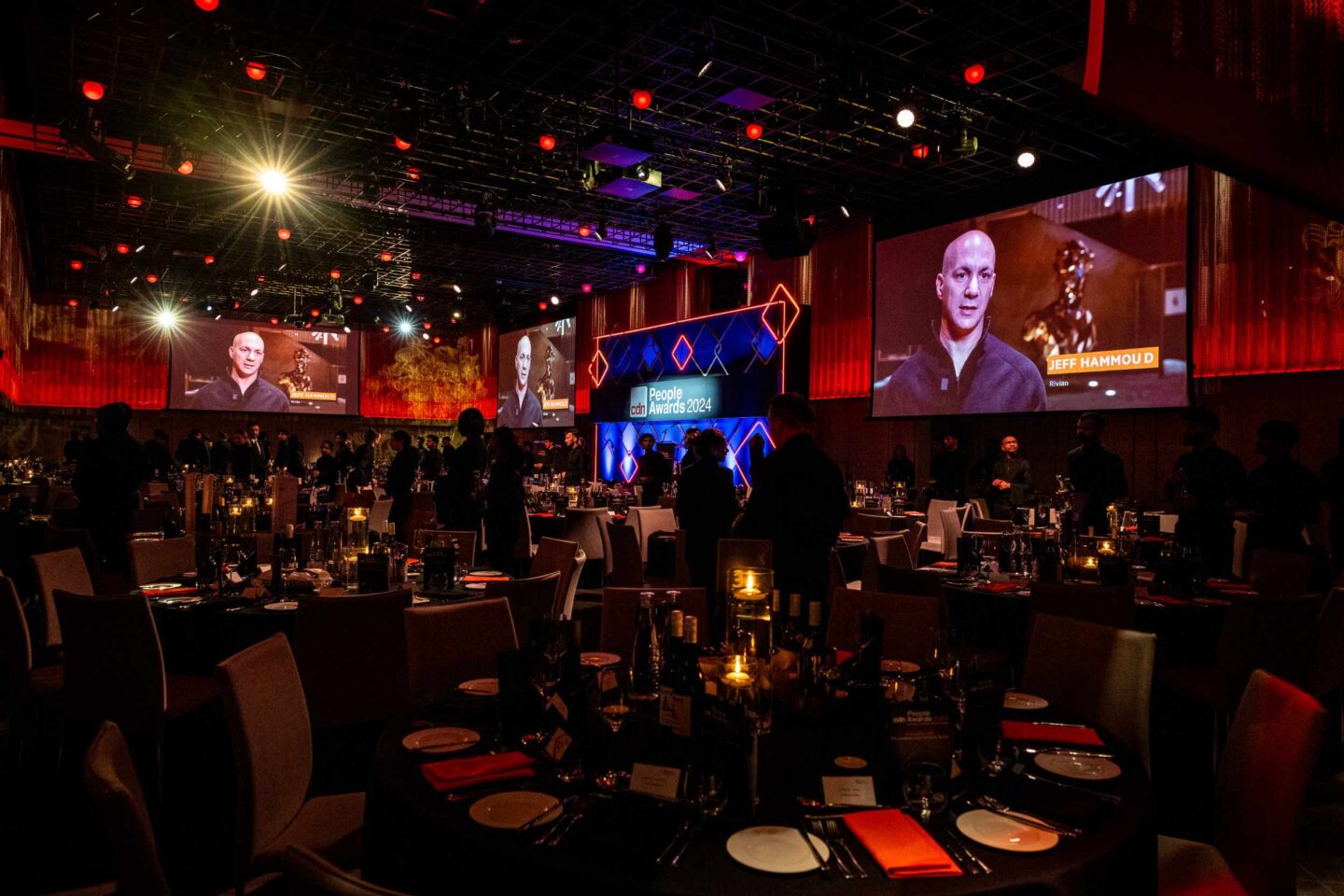
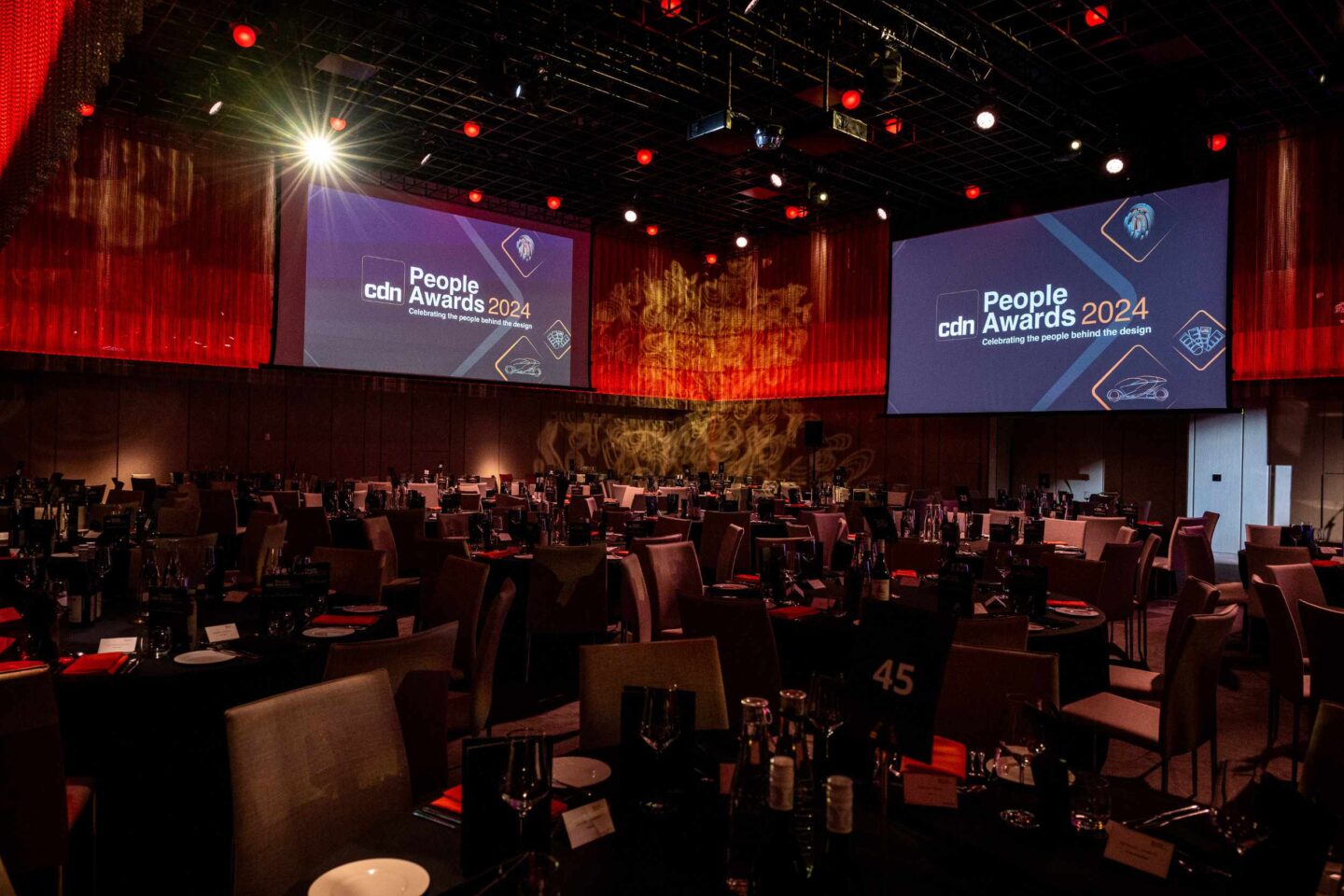
We are nominated for the Car Design News People Awards 2025!

Incari has been shortlisted for the Car Design News People Awards 2025 in the category "Best Supplier Award". Our nomination is based on our project with FORVIA, where we demonstrated how multimodal user interfaces can be developed, tested, and validated faster and more efficiently.

In just 1 week, we built a fully functional UI for FORVIA´s CES 2023 demonstrator including lighting, haptics, audio, and gesture control, all running in real time.

By seamlessly integrating Incari Studio into Autodesk VRED, a central part of FORVIA’s 3D workflow, we replaced fragmented processes in HMI development with an agile, collaborative workflow that involves designers at the earliest stages of HMI creation.

This significantly accelerated the entire UX/UI validation process and set a new benchmark in HMI development. Our project laid the foundation for Incari Studio to become an integral part of FORVIA’s HMI toolchain.

We are proud to stand alongside other leading suppliers on this year’s shortlist. The winners will be announced on December 4, 2025 in London.

📺 Watch the project video on YouTube
ℹ️ Read more about the partnership and our speech at the Autodesk Innovation Forum


#CDNPeopleAwards #Incari
Pictures: CarDesignNews, 2024

Back to overview

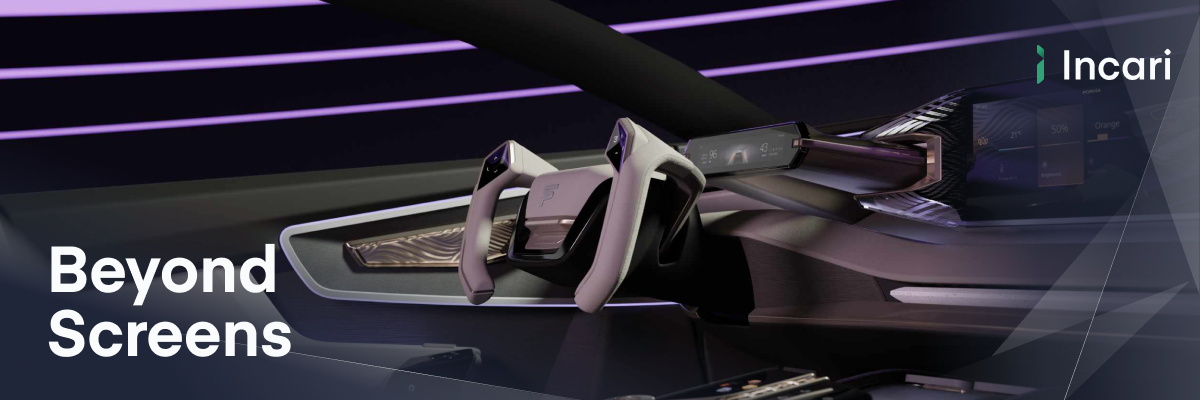
The Cockpit of Tomorrow: HMI Beyond Screens

The next generation demands smart HMIs that go beyond screens, enabling seamless interaction across all senses. For the HMI systems of tomorrow, this means: less complexity, higher user experience, intuitive operation and above all, simplified development with significantly shorter cycles.

The automotive industry has stalled: Long development cycles and complex processes are slowing down especially software innovation. Rigid structures prevent fast developments and flexible adaptation. The driver of tomorrow doesn’t primarily want to own, but they want to experience. The TikTok generation expects easy-to-use, smart systems tailored to their needs. Connected, context-aware HMIs that anticipate and support those needs will be a decisive factor for brand loyalty and brand experience.

For the HMI systems of tomorrow, this means: less complexity, higher user experience, intuitive operation and above all, simplified development with significantly shorter cycles. It’s about full multimodality, engaging all five human senses. HMI doesn’t just mean “interface”. It means “interaction.” The trend is moving toward fewer, even no screens, towards smart surfaces, next-gen head-up displays, and intelligent HMI surfaces that may require no physical touch.

To achieve this, HMI development must become faster, more integrated, and more user-centric, moving away from a screen-focused approach toward seamless interaction between human and machine. The goal is an experience where interaction is so natural and context-driven that screens may no longer be needed at all.


Incari’s CPO Alexander Grasse joined the “Car Design News” couch at the Autodesk Automotive Innovation Forum 2025. In the interview, he explains why the future of HMI goes beyond screens and how Incari Studio enables seamless, next-generation user experiences. Watch the video here.